
How AI-Powered Plaque Analysis Is Transforming CAD Management
Every day, physicians rely on probability-based methods to guide decisions for patients with suspected coronary artery disease (CAD). But these tools don’t tell the full story.
While traditional testing methods can detect surrogates and markers of CAD, they often fail to provide precise risk stratification, especially among patients with non-calcified plaque or atypical risk profiles1. A “clear” scan or a reassuring score from these older tools doesn’t always mean a patient is truly low-risk. As a result, opportunities for early prevention or treatment can be delayed or missed altogether.
Since our founding, Heartflow has been committed to closing the gaps that conventional diagnostics leave behind. We believe better insights lead to better outcomes, and that starts with offering physicians a more comprehensive picture of their patients’ coronary health. This year at the Society of Cardiovascular Computed Tomography (SCCT) Annual Scientific Meeting, we were proud to share our latest data and advancements that are driving a measurable impact in coronary care.
DECIDE Registry Delivers Transformative Insights
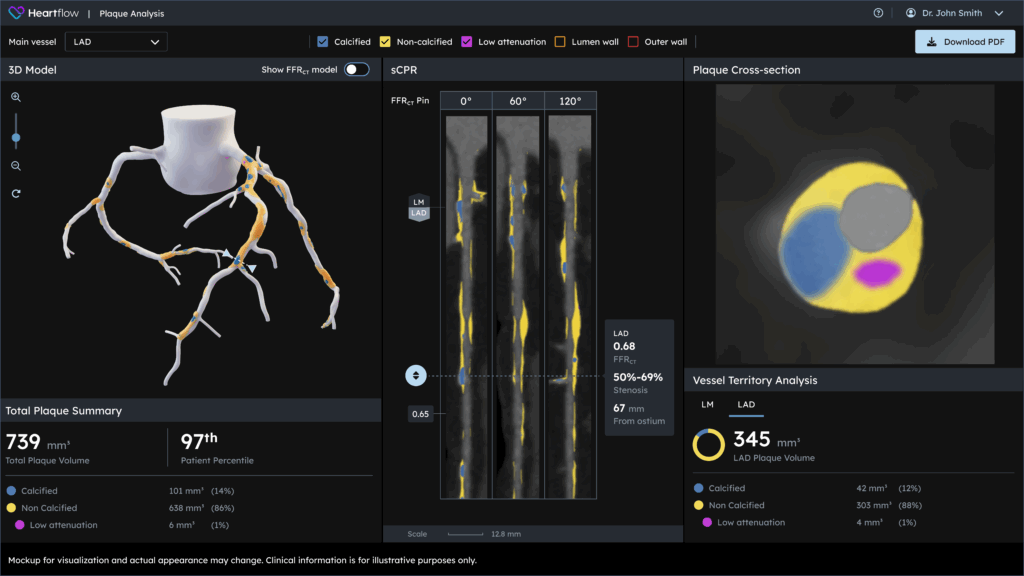
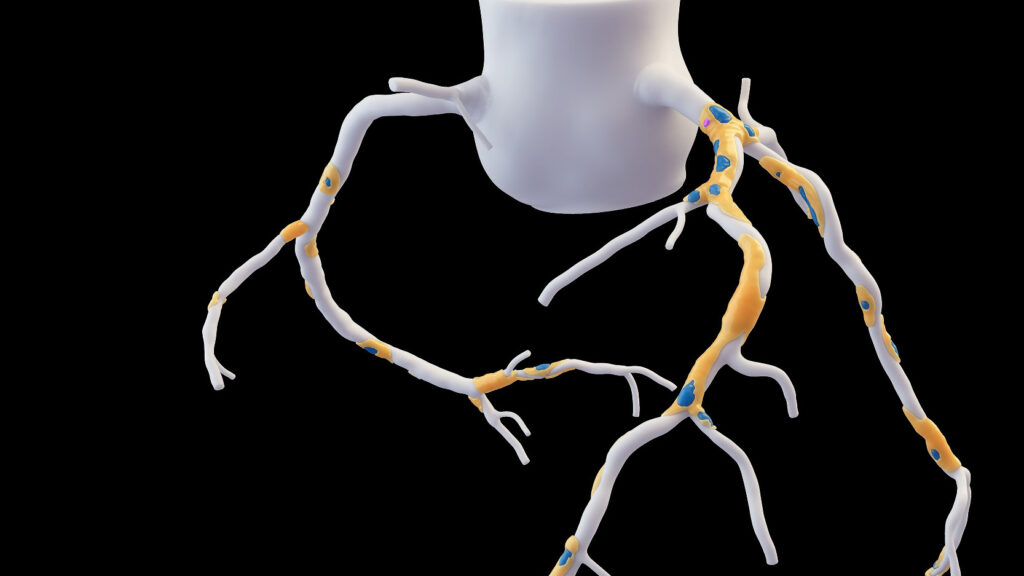
At SCCT, we shared primary endpoint data from the DECIDE Registry, the largest prospective registry of its kind, which is evaluating AI-powered Heartflow Plaque Analysis in coronary care. The results were striking: Heartflow Plaque Analysis led to medical management change in over half of patients beyond coronary computed tomography angiography (CCTA) alone, regardless of traditional risk factors or CCTA findings2.
To help physicians act on these insights, we also introduced Heartflow Plaque Staging*, an investigational framework that simplifies complex plaque data into four intuitive categories: mild, moderate, severe, and extensive. This model, developed by leading cardiologists and CCTA experts, was validated in the FISH&CHIPS 8K study and is designed to help clinicians stratify risk with clarity and confidence.
Turning Comprehensive Plaque Data Into Confident Decisions
Here’s what that looks like in practice:
Medical management changes informed by Plaque Analysis with Plaque Staging* led to an average LDL-C decrease of 18.7mg/dL, resulting in an expected ~15% decrease in risk of a cardiac event3.
Even more telling: nearly one-third of patients with no calcified plaque on CCTA alone still had their treatment plans changed after Heartflow Plaque Analysis2. These are the kinds of incremental insights that Heartflow Plaque Analysis can provide, marking a pivotal shift toward truly personalized care.
A Clearer Path to Personalized Coronary Care
Conversations surrounding the DECIDE Registry results at SCCT reflected a new understanding among many of my fellow clinicians: population-level risk tools and conventional imaging aren’t enough to guide individualized care. Tools like Heartflow Plaque Analysis with Plaque Staging are bringing precision and clarity to the forefront of CAD care.
That’s the future we’re striving toward at Heartflow: one where every patient with suspected CAD receives care as unique as their anatomy. The DECIDE results provide us with the evidence and momentum needed to continue transforming patient care.
On behalf of the Heartflow team, I’d like to extend sincere gratitude to the DECIDE Registry patients and investigators—especially co-primary investigators Drs. Sarah Rinehart and Leslee Shaw, along with Dr. Cian McCarthy, who was presented with the first-place 2025 SCCT Clinical Trials and Registries Award for the DECIDE Registry results. Thank you for your dedication to improving patient care. Your work continues to advance the field, and I look forward to what we will accomplish together next.
See CAD. Manage for life.
*Heartflow Plaque Analysis is an FDA-cleared device. Heartflow Plaque Staging is an investigational-only framework, and its safety and effectiveness have not been reviewed by the FDA.